News
Test Site Materialenwerf: A rather complex process

The beating heart of Rotterdam Architecture Month 2026 is the Materialenwerf, bringing attention to much needed shifts in perspective on the reuse of materials and collaboration. Barbara Luns, director of AIR, and Estelle Barriol, designing the testing ground with Studio ACTE, discuss the process, concept, and ambitions.
Text written by Fay van der Wall
Photos by Paul Swagerman
The Materialenwerf is referred to as a testing ground; what are you testing here?
Barbara: “We test what it takes to build a materials depot. So it’s focused on the process, more than the outcome. How to get the permits and how to get the materials for instance. The ultimate way to test these processes is by going through them.”
Estelle: “Our testing ground doesn’t have a commercial purpose, like an actual materials depot might have. This gives space to programming and reflection on the functioning of the depot. The shift towards a circular use of materials has a lot to do with infrastructure, and all the parts that need to move to make this change. That’s a rather complex process. The smaller the scale, the easier, but as soon as you scale up, reuse becomes a dream, rather than reality. How do we keep the material and make it circulate, how do we keep from demolishing too much? There are so many questions to consider, and we hope to bring those together during the month in the combination of building and programming.”
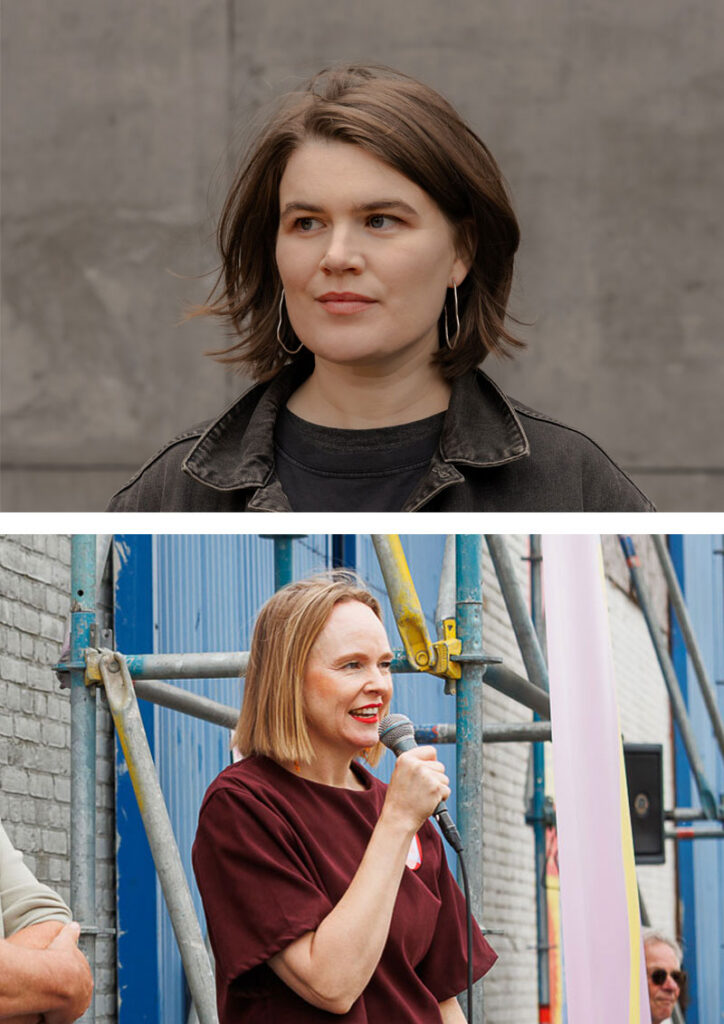
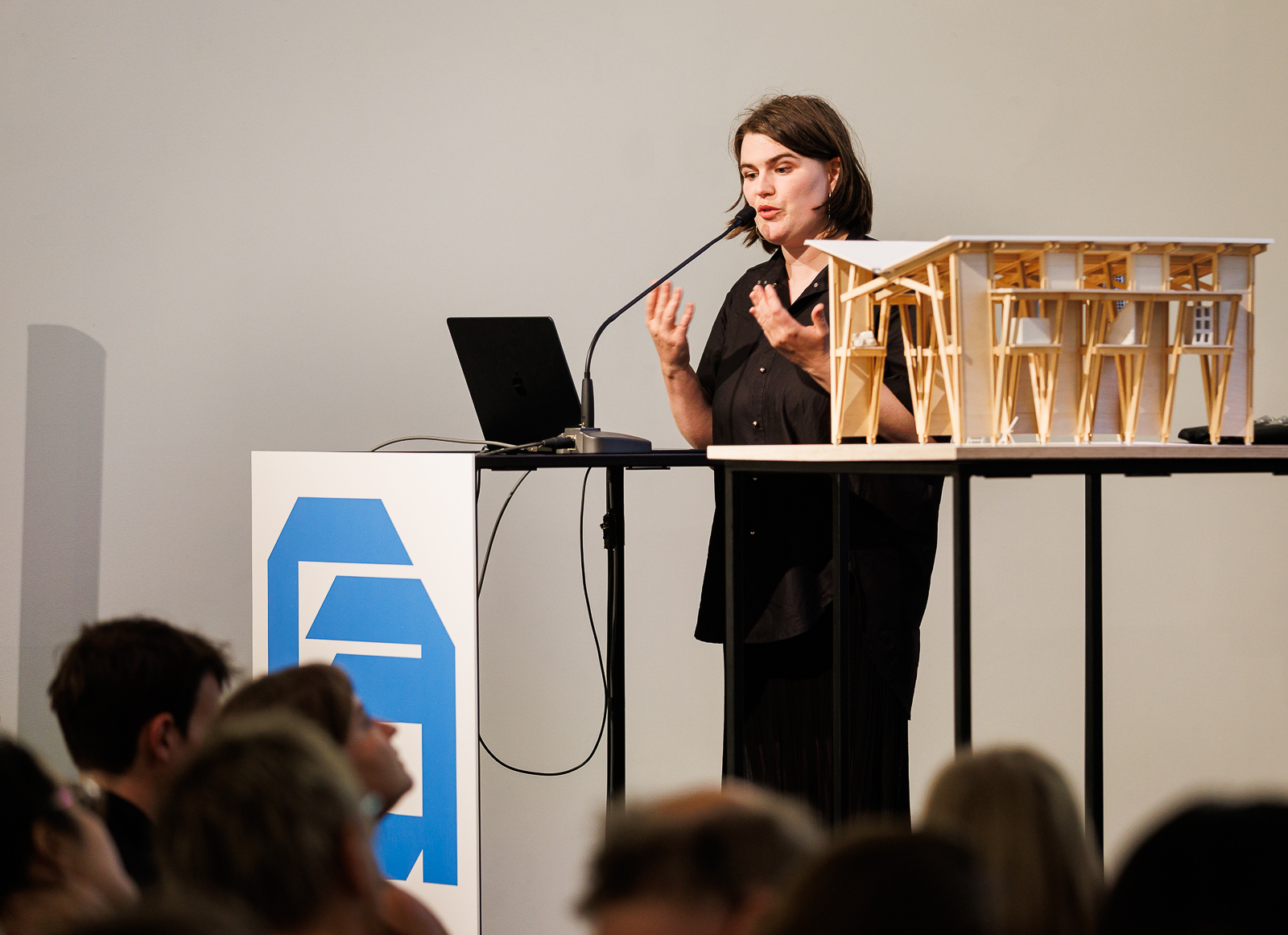
Up: Estelle Barriol photo: Charlotte Gaubert | Under: Barbara Luns - photo: Fred Ernst

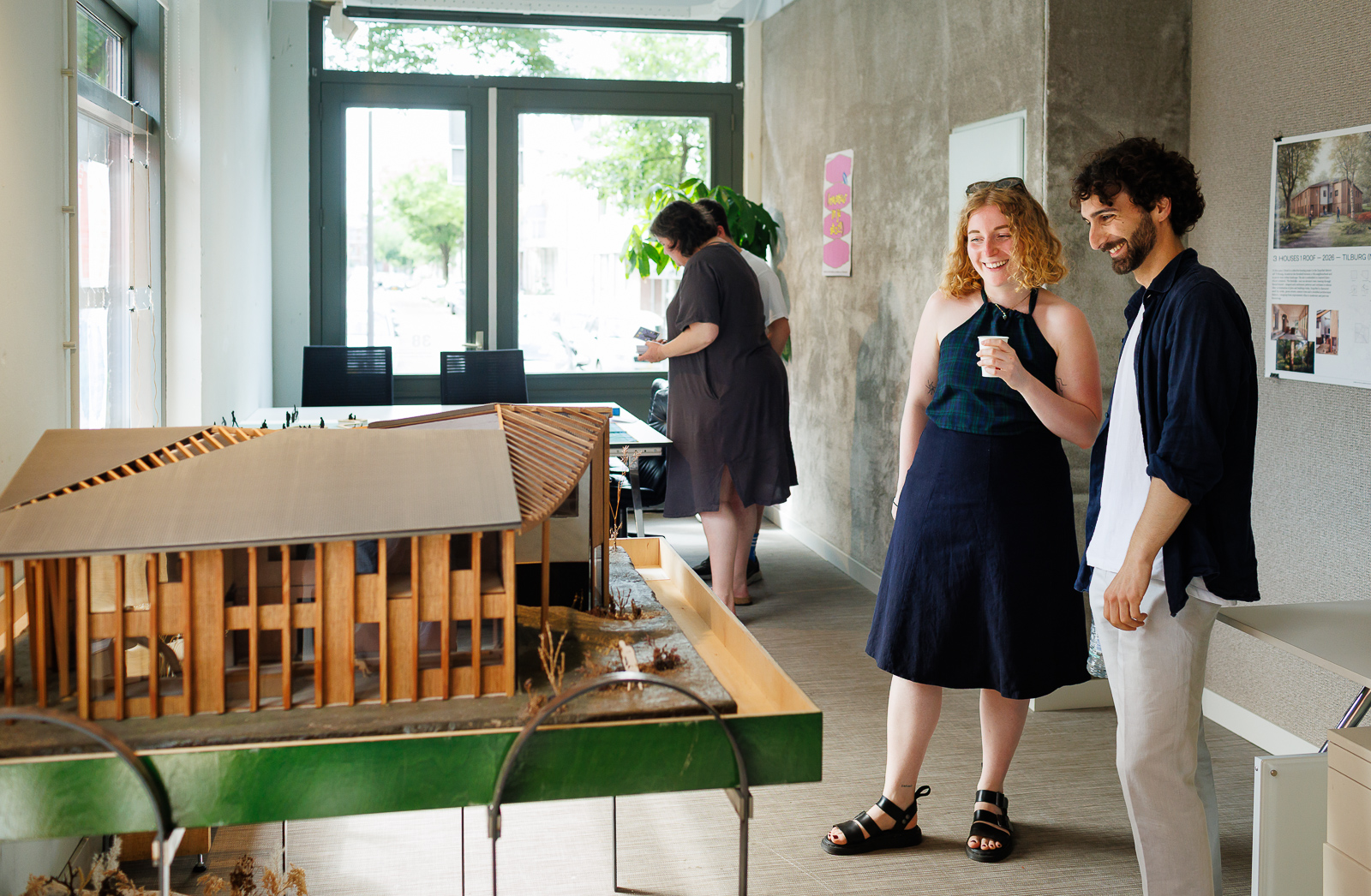
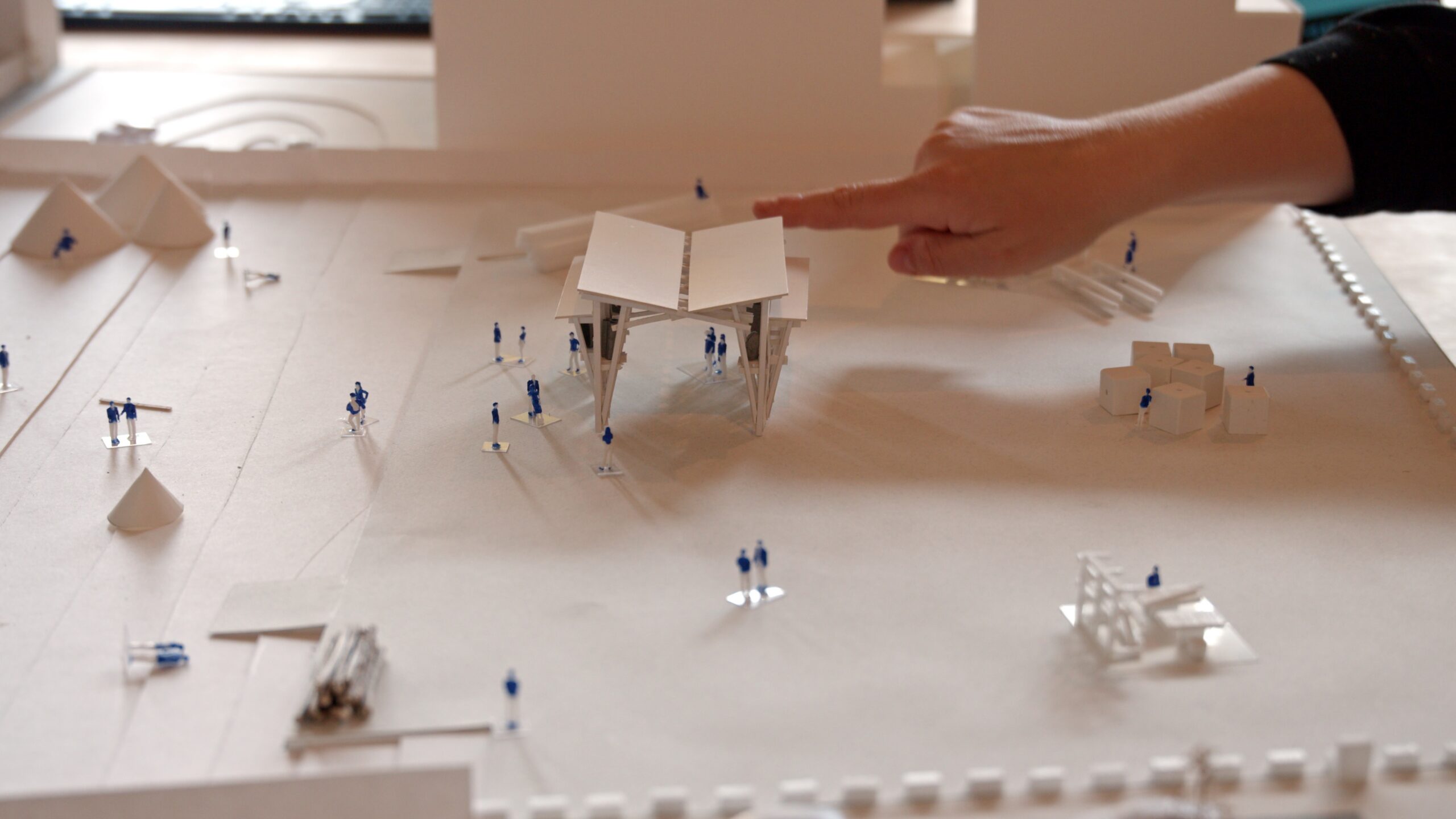
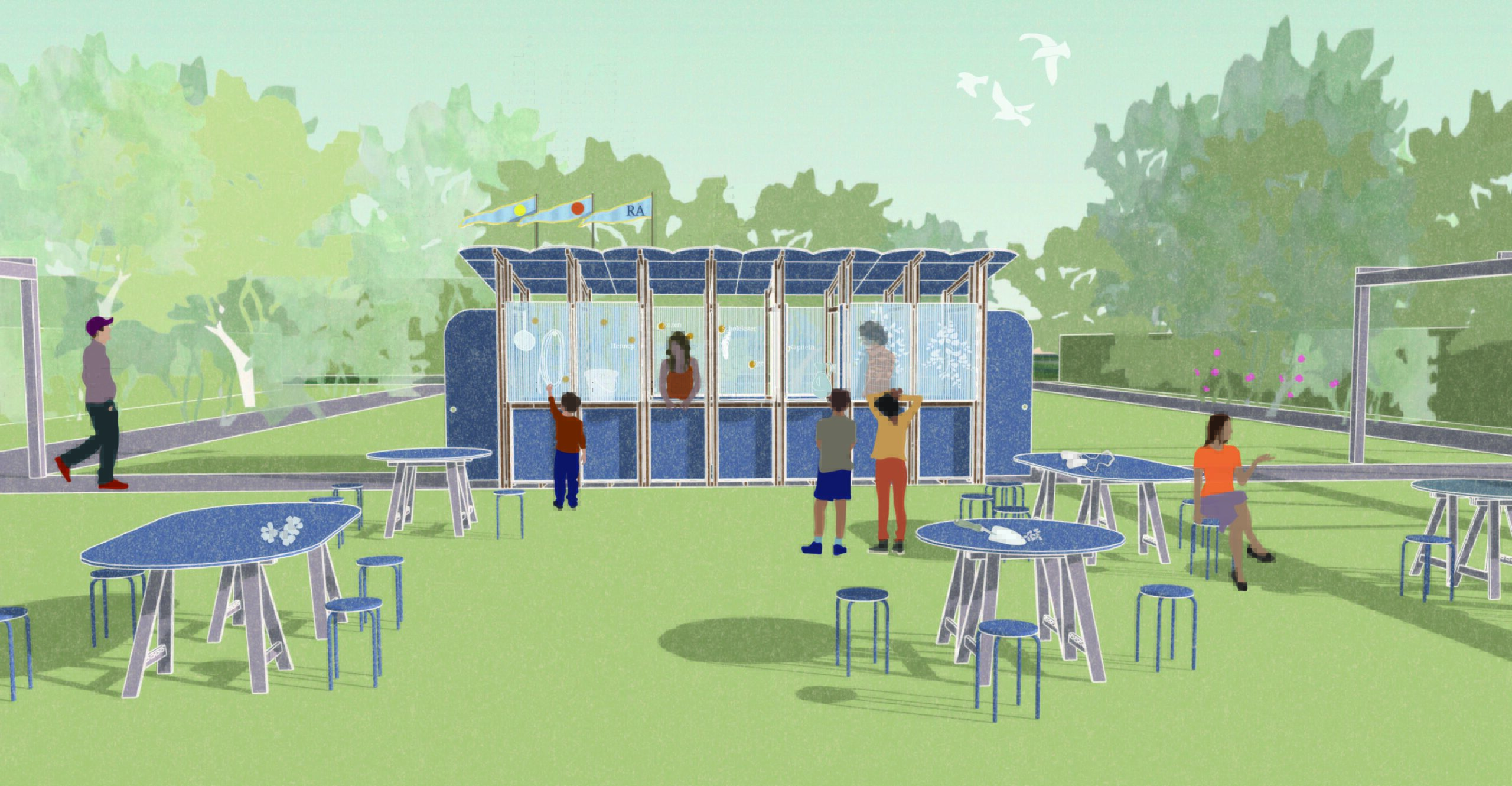
Top foto: Pavilion model by Studio ACTE
What does true circularity entail? Especially in building?
Estelle: “Circularity is a non- ending path and it can be applied to many things like energy or economy. When we talk about circular use of materials, it’s important that we do not use the word ‘waste’: we resist discarding materials. That starts when you demolish something. That in itself is not circular and should shift towards transformation and when necessary deconstruction.”
Barbara: “To be clear, this is far from the way that the industry currently works. In the building industry, the life of materials after their first use is mostly not considered at all.
The city of Rotterdam has the ambition to have the built environment adhere to the standards of the Paris Agreement by 2050. To achieve those goals in sustainability, a circular approach to building is indispensable.”
What are the biggest obstacles in the shift towards circular construction?
Barbara: “I spoke with a group of architects recently, where somebody pointed out: in a building there can be a steel beam, holding up several floors. But when the building gets demolished, that beam is worth nothing, because nobody knows exactly how much it can carry. That’s a good example of the practical hurdles in circular building. Everyone knows it’s a strong beam, but it can’t be made official on paper. There is a useful lesson there for future developments: to make sure all the information of the materials is archived at the start of a new build. That way, when it comes to deconstruction, you know what you have.”
Estelle: “On the smaller scale of interiors and detailing we can work differently already. But the problems arise when we scale up. The existing policies, permits and building codes on that level need to be adapted to taking in reused materials. Municipalities, provinces, and governments need to be on board, as they have a big role to play in this transition. It’s an ecosystem where everybody needs to change their way of looking at things. But the rules need to be changed first.”
Can you tell more about the building materials used in the Materialenwerf?
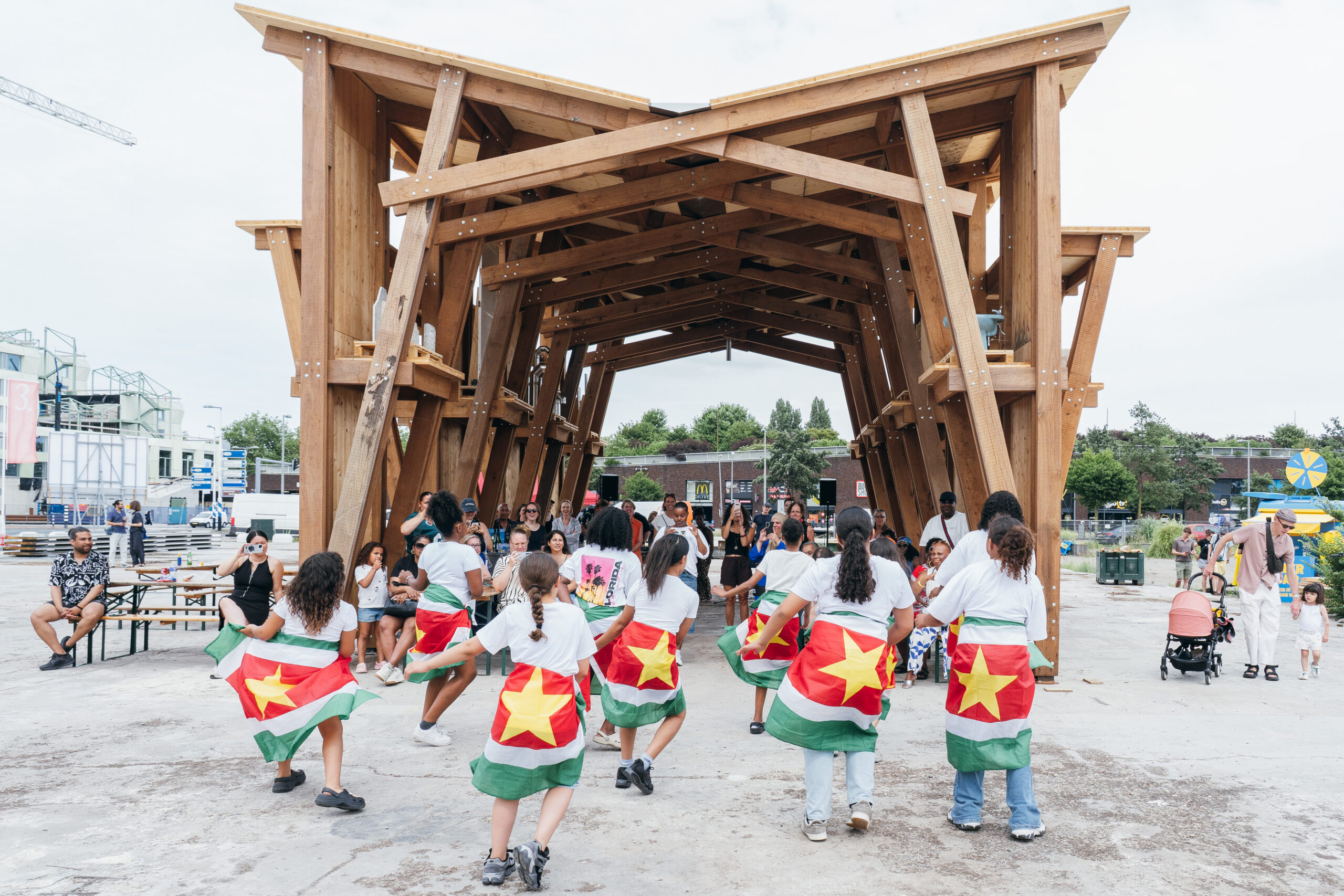
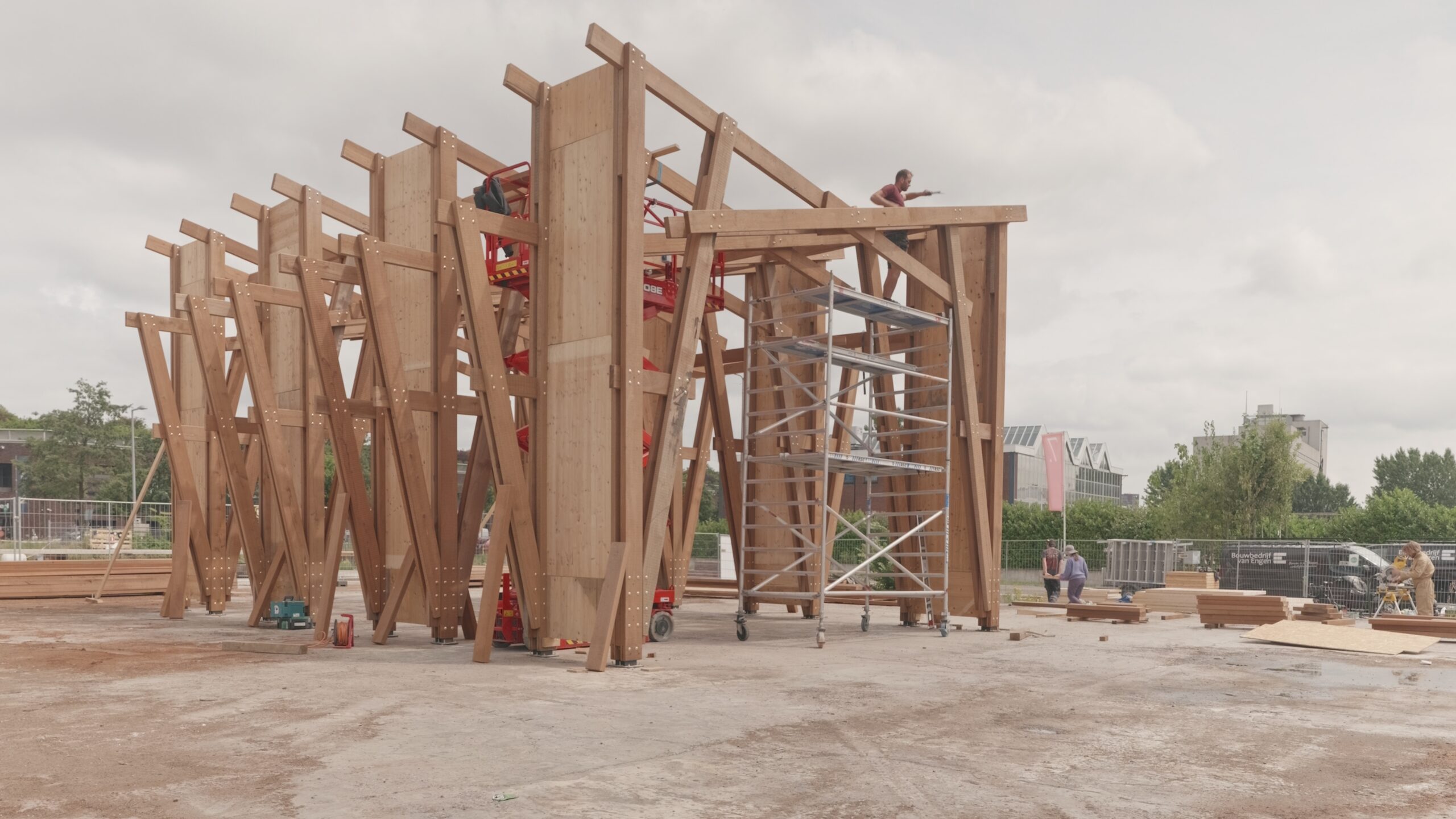
Estelle: “The pavilion is being built from a hundred percent reclaimed materials and becomes a study for the reuse process. It’s a semi-large scale, a hundred square meters of covered space with a flexible use. The structure needed big beams, going up 7 meters. Those are made of old mooring posts from the harbour. It’s a type of wood called Basralocus, which was plundered from overseas in colonial times. These beams carry symbolic value, connecting to the maritime environment and history. By giving the materials a new use, we add to the story. This connects directly to the type of conversation we want to start with the Depot: about topics like extracting materials, fair practices, environmental impact. The panels are made of remaining stocks of CLT (Cross Laminated Timber), which is a much more recent material. We measured the material that was available to us and created rational dimensions in the application. The steel components come from a Belgian manufacturer called Halfwerk, specializing in reused metals. They recover discarded and leftover stocks on a global level and have the machines to make these into new parts. The roof will be made watertight with truck tarps that were used in the Schaatsbaan.”
What are visitors going to be able to experience on the site?
Estelle: “Around the pavilion there are displays of large-scale building components. We want to emphasise the mass of the materials we are talking about. Beams that are thirty meters long for instance, piles of plates that are five by three meters. To show that when we talk about reuse, it is about structure and infrastructure. But about detailing like doors or doorknobs too. All scales are addressed. I hope that when people see the materials on display, it will trigger something in them to reconsider their relation to the materials around them. If only for a few minutes.”
Barbara: “The programming of the site is very important. That’s where the discussions take place, where knowledge and experiences are shared. We are inviting small companies working at the vanguard of this development, but also large private building companies. By bringing those together we hope to help accelerate the change.”
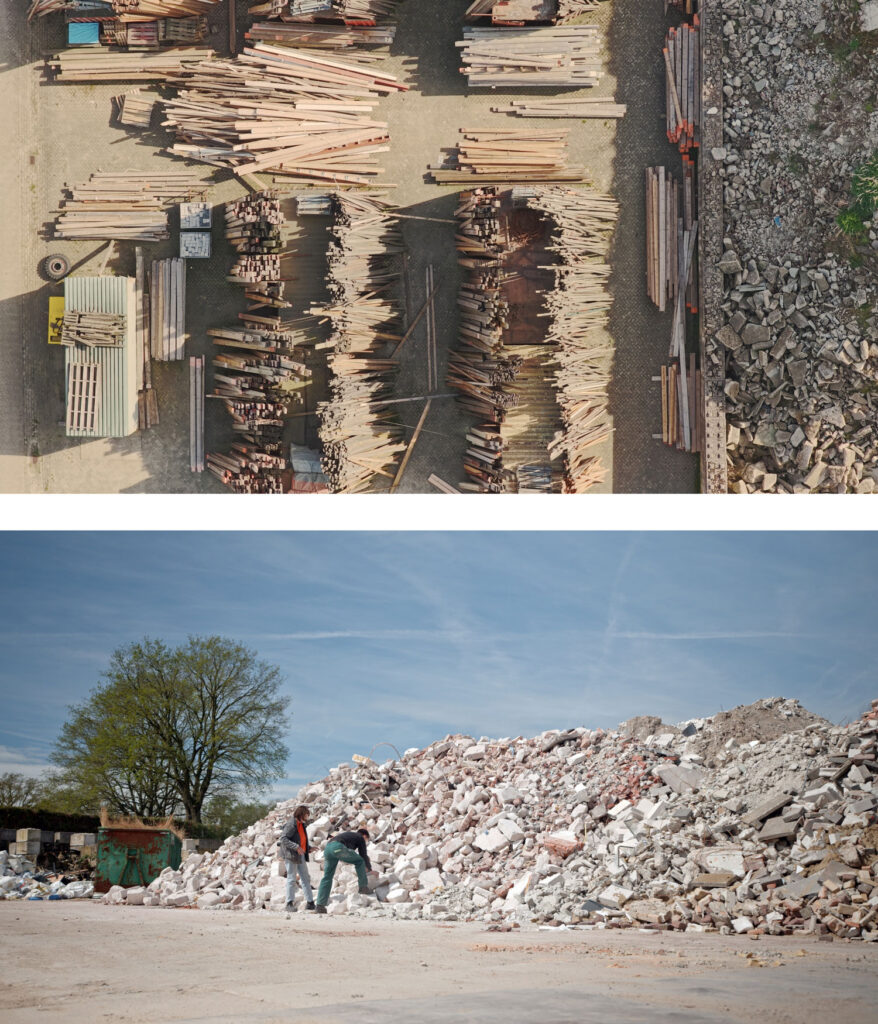
Material at an other material depot
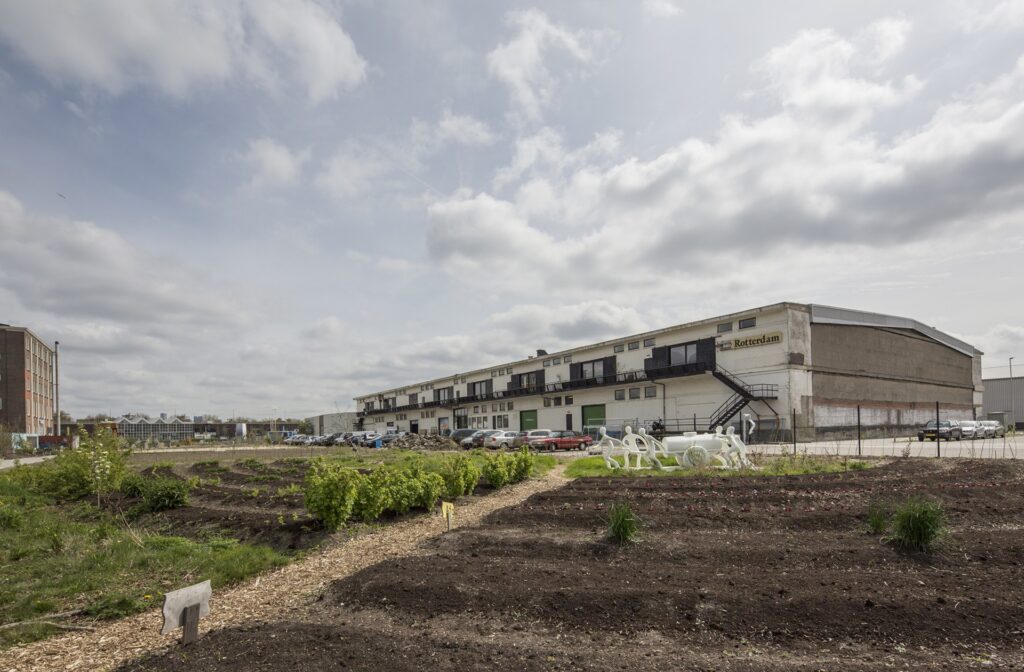
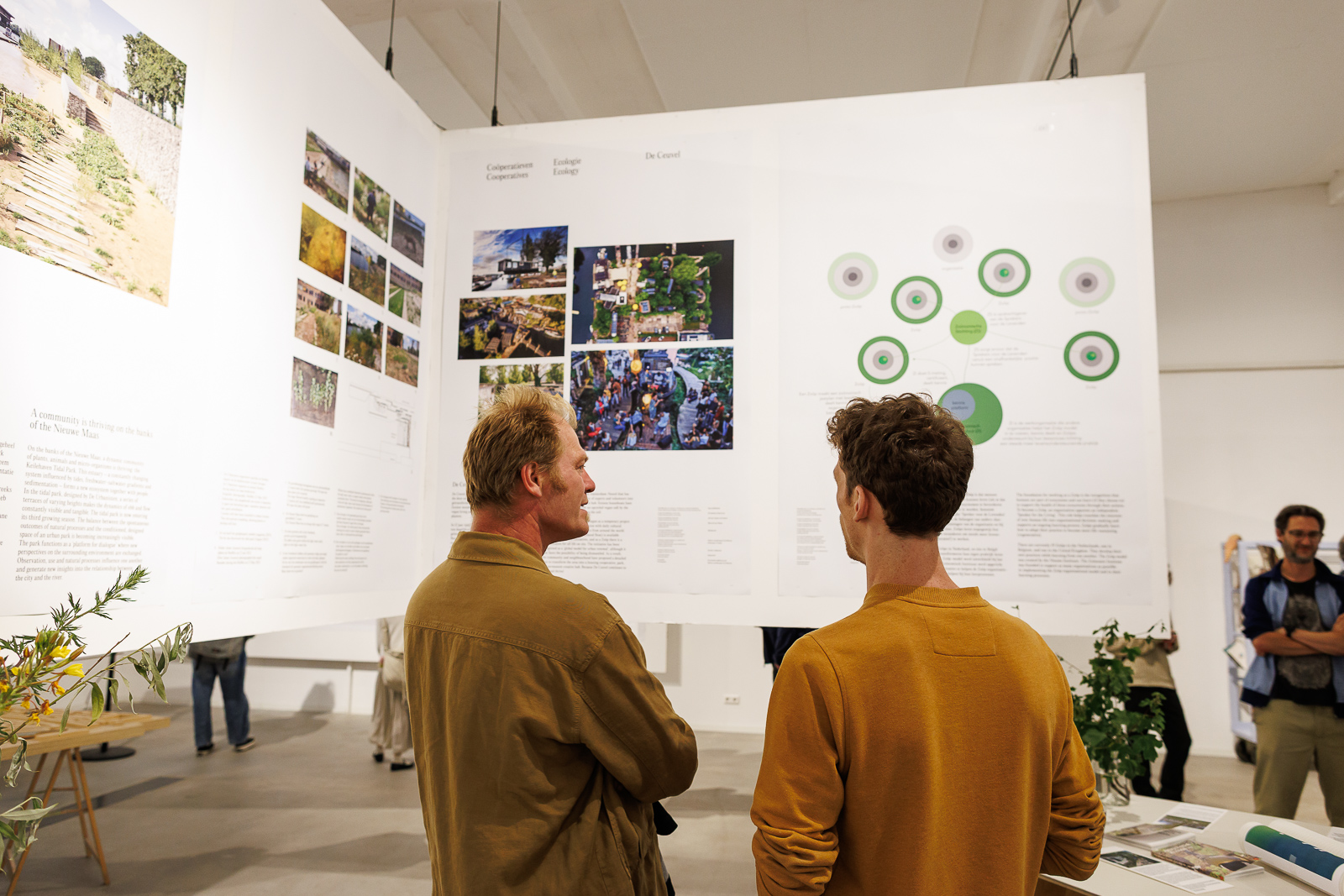
Keilepand | Photo Frank Hanswijk
How does the exhibition in the Keilepand relate to the Materialenwerf?
Barbara: “What’s happening in the Keilekwartier is very inspiring. It’s part of M4H, a former harbour area as large as the city centre that’s being redeveloped into a residential area. The Keilepand and KeileCollectief have taken the initiative to start an area-cooperation to research a philosophy of circularity and collectivity. That’s what the exhibition is all about, showing a lot of examples of existing initiatives. We want to show that a lot of the changes we are proposing at the Materialenwerf are already happening, and a lot of work is already being done. It’s important to take that very seriously. We need to cherish the people at the vanguard, as the more informal and smaller scale initiatives are leading the way for the bigger transition.”
What lessons has the testing ground delivered so far?
“Estelle: “As Studio ACTE, we are scaling up when compared to our earlier projects. I’m learning that the design itself does not take more time at this scale, but the quantities of material are different. And those require more time to source and to arrange the logistics. The importance of collaboration is also highlighted for us. Luckily, the people we work with are very motivated and willing to work in new ways to achieve our goals.”
Barbara: “Last year we already made a testing ground at the Schiehaven where we started touching on ideas of circularity. But the process is very different this year. Building with reclaimed materials asks for an adaptive attitude, which doesn’t align with the linear processes of permits and financing. Combining the two has been challenging and fascinating.”
What impact do you hope to make?
Estelle: “In a couple of years a lot of buildings will be added to the area of M4H, and a lot of inhabitants will move there. It’s exciting to be able to set up our temporary structure here and explore the needs and conditions for the transition towards a new way of building. I hope we can plant some seeds for new ideas for the municipality and developers, by setting parameters for conversation.”
Barbara: “The fact that we build something temporary and in the context of a festival, lowers the threshold for collaborating parties to step in. But I see it as such an important vehicle to question the habits that are so difficult to change. All participants within the existing processes of building need to put in the effort. If one of them refuses, it impacts the whole chain. Whether we can make the shift is not about technical possibilities, because those are there already. It’s a shift in culture, and that’s why we as a cultural institute are taking it upon us to speak out. The testing ground should not be taken lightly, there’s a lot of effort and value invested there.”