News
Interview | Collectivity in Practice: Trust and Experimentation

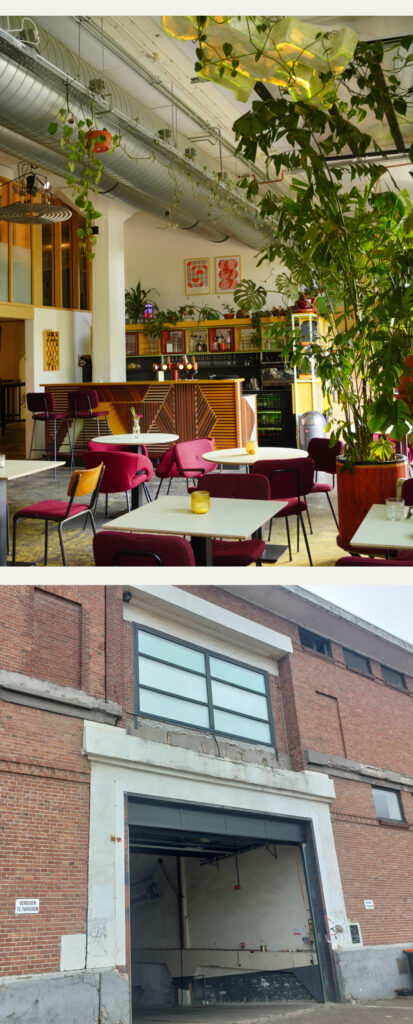
Architects Monica Adams and Folkert van Hagen moved their firms into a large space in the Keilepand ten years ago. As initiators and driving forces behind the KeileCollectief, they now play an indispensable role in the development of M4H.
Photo: Frans Hanswijk
How did you end up moving to an old building in the harbor area?
Monica:“In 2011, we decided to have our two companies work in the same space, in the Diepeveen Building, where Folkert had already been based for some time. That worked out really well, so when we started looking for a larger space, we knew we wanted to do it together. The question then was: should we move further into the city, or further into the harbor area?”
Folkert:“We decided to move further into the harbor, to the edge of the city. We explored several buildings. We immediately thought this building was exciting—large and unconventional. We both had a good feeling about it, but we had agreed that everyone in the company had to support the choice.”
Monica:“The area was still very rough around the edges, which led to some discussion. We had to convince people that it would be fun and interesting to move here. We organized workshops together to explore the potential of this place.”
Folkert:“We discussed what the space should look like and what our companies could share with one another. Everyone became enthusiastic. Once we made the decision, we had six months to renovate the building. To save costs, we did a lot of the work ourselves. We created a schedule with renovation work every weekend. No one was obliged to participate, but people could sign up to help. It was a very enjoyable period, but also an incredibly demanding one.”
Monica:“Everything in this building is huge. Even painting a single wall means covering a massive surface area. At one point, we had to order a thousand liters of paint in one go.”
Folkert:“By Christmas we were able to move in, and in January our two firms started working here. But half of the space was still empty. Soon after, De Urbanisten joined us. Through word of mouth, many others found their way here as well. By the summer holidays, six firms had filled the floor, and together we formed the KeileCollectief. That’s when we discovered that working together in one large shared space was still something of an experiment. The concept was appealing, but in practice you have to build the trust that makes such collaboration possible.”

Monica Adams & Folkert van Hagen | Foto boven: Frans Hanswijk - Foto beneden: Fred Ernst
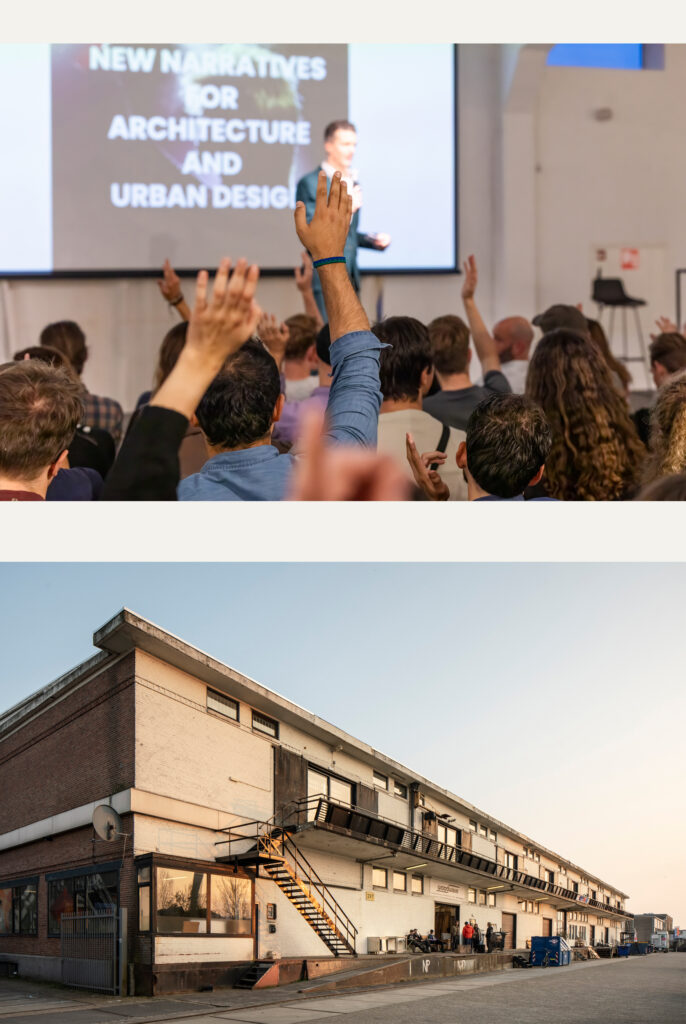
Carbon Stories and Keilepand | Photo up: Jacqueline Fuijkschot - Photo under: Frans Hanswijk
How did you become involved in the development of M4H?
Folkert:“About a year after we moved in, the municipality began developing ideas for the future of the area through a spatial framework. We participated in the public consultation sessions that accompanied that process.”
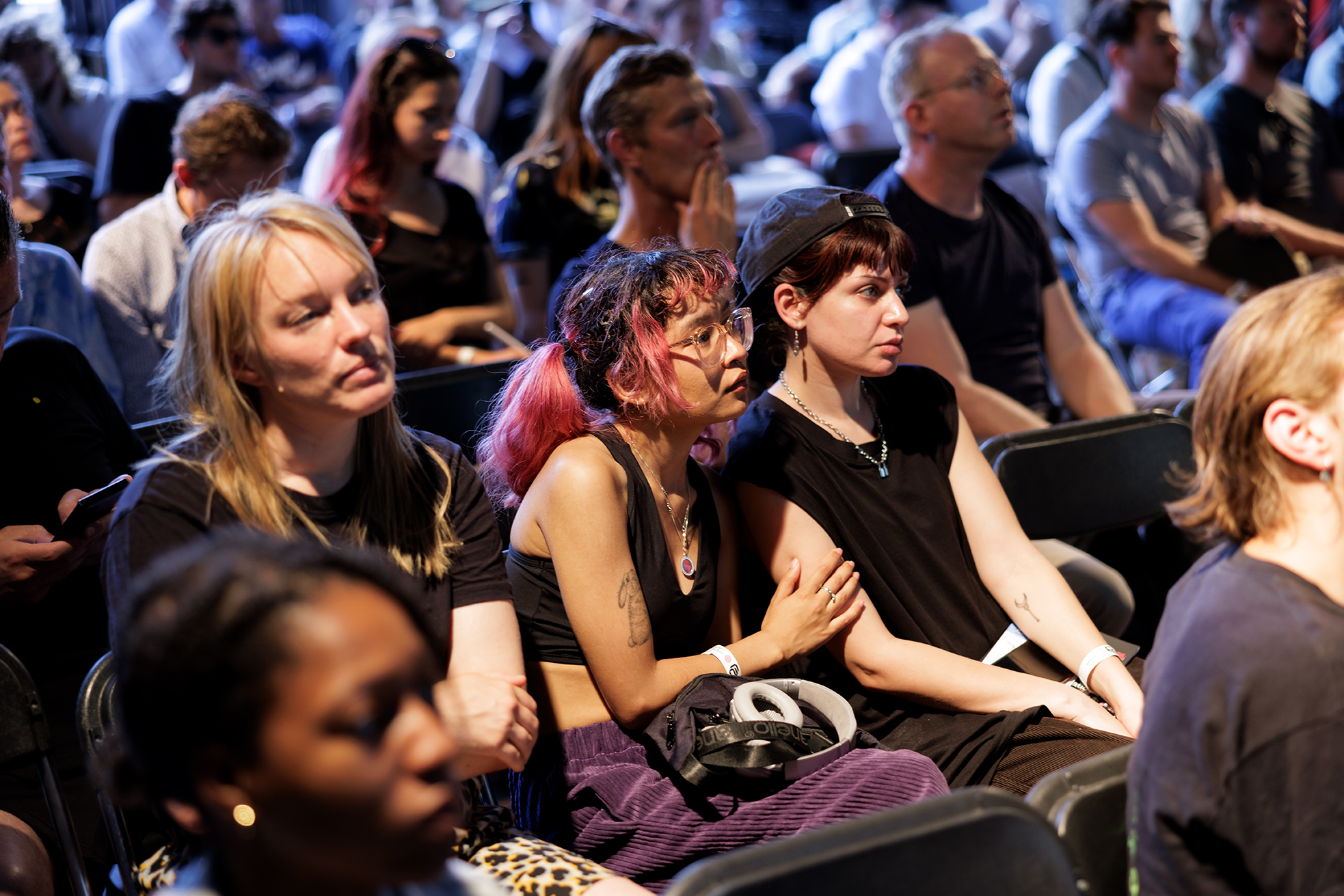
Monica:“In 2018, M4H became the test site for the International Architecture Biennale Rotterdam (IABR). At that point, the KeileCollectief started organizing a series of lectures and debates to explore what sustainable area development could mean here. We did that every three months for two years. During that process, it became clear that the spatial framework was genuinely ambitious. Its motto is ‘collectivity as the foundation of circularity.’ From that came eight principles, including shared energy systems, supporting makers and entrepreneurs in the area, sustainable energy, climate-adaptive design, and preserving the heritage and identity of the place.”
Folkert:“By organizing those events, we began to notice that the collective was really working. Together we could decide whom to invite, and we consistently brought people together who had never met before because we could draw from such a broad network. Some participants worked on circularity in very practical ways, while others approached it from a policy perspective within government. We also involved people from the local community.”
You purchased the entire building as a collective. Why was that important?
Folkert:“The municipality owned the building, and we realized that at some point they would likely want to sell the property. We could easily have ended up with a new owner telling us that our ten-year lease would not be renewed. To prevent that, we proposed buying the building ourselves. I told them: we can develop it dynamically, taking small steps each year so that it grows alongside the development of the wider area. The proposal was approved because we had already built a relationship of trust. When we received the official documents, it was a bit overwhelming—fifteen thousand square meters! What were we going to do with all that space? So we discussed it with everyone again. The plan became to house a diverse range of companies, united by a shared commitment to shaping a sustainable future. As the KeileCollectief, we produced a booklet—a kind of business plan—outlining what we wanted to achieve and stimulate. Once the purchase was finalized, we undertook a major renovation. We improved the building’s energy label from G to A+, and it was designated as a municipal heritage monument.”
How is the Keilepand doing today?
Folkert:“There is an incredible amount happening here! We have always told the companies based here: you don’t have to collaborate, but you are welcome to. In practice, we see companies contributing to the collective in all sorts of ways. That creates a vibrant dynamic. We are also very busy programming events in the main hall, something Monica is now almost fully dedicated to.”
Monica:“We have people from a wide range of professional backgrounds, and that leads to valuable cross-pollination. Especially since restaurant Cult=us and club Export moved into the building, more and more visitors from outside have started coming here. Recently, I even heard someone call it Rotterdam’s hotspot! People often tell us that the building has a welcoming and creative energy. That is exactly what we have always worked towards—and continue to work towards—with great passion.”
Folkert:“We now collaborate closely with the other stakeholders in the area. This is truly a new form of area development, so it took some time to find the right organizational structure. About a year ago, we established a foundation to represent the interests of the private parties in the district. Together with the municipality, the foundation participates in an area cooperative: a large round table where everyone has an equal voice. Every month, we meet with the municipality, which owns around 90% of the land in the area. Now that the organization is properly embedded, the conversations have become much more open. People are willing to put their cards on the table. As a result, we arrive at a genuine diversity of perspectives on a central question: how do we create this piece of city together?”
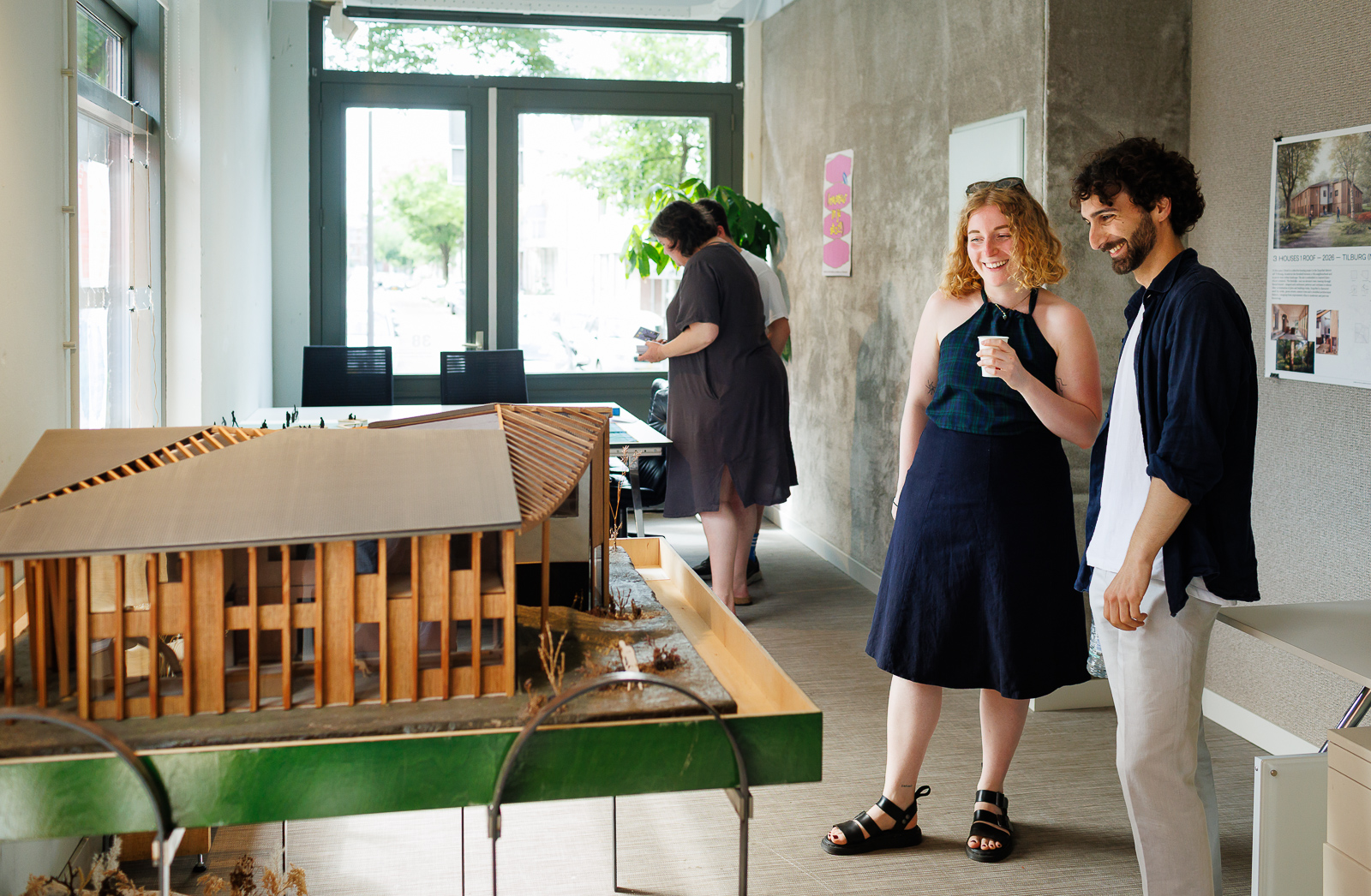
You created an exhibition for RA Month. What can visitors expect to see?
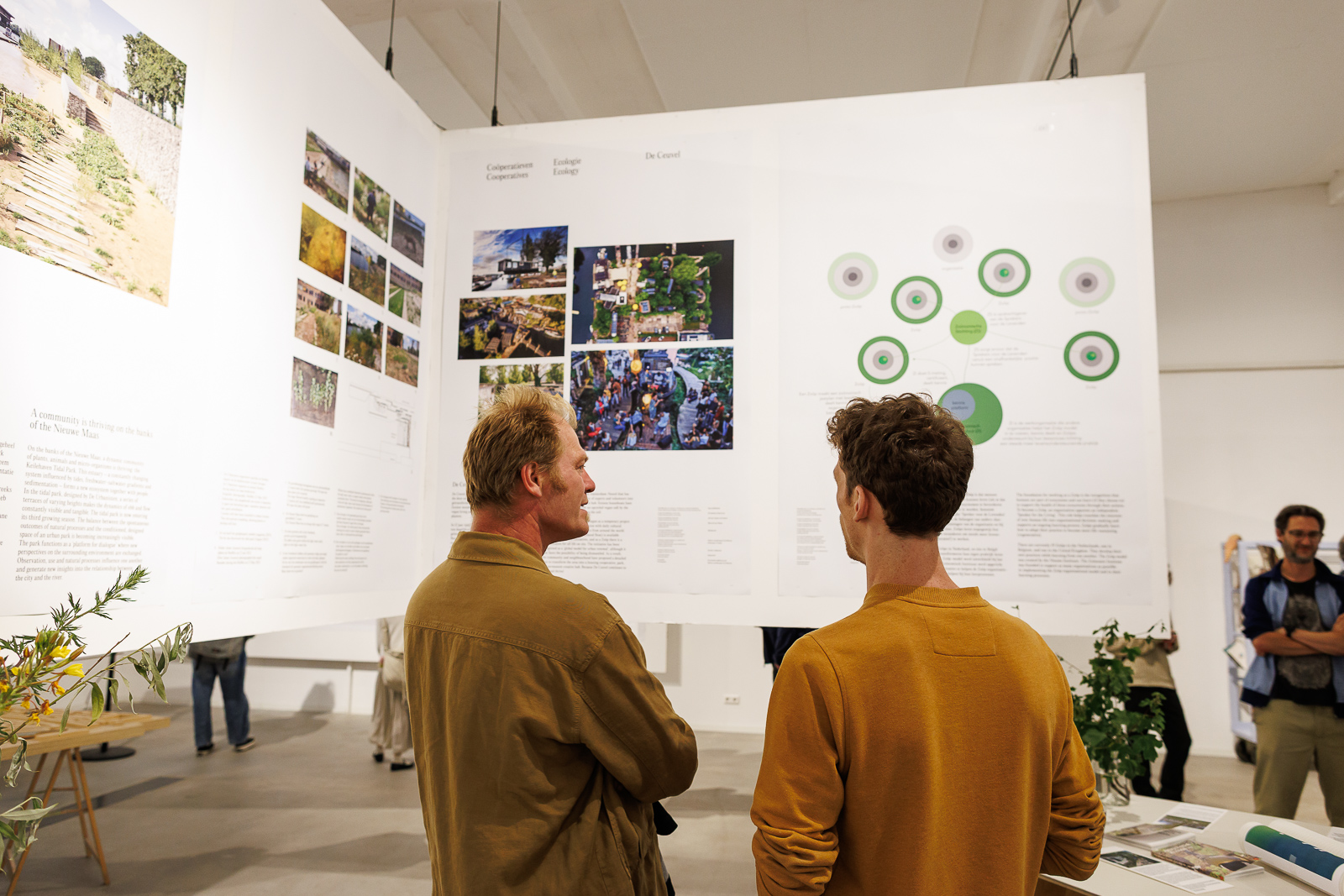
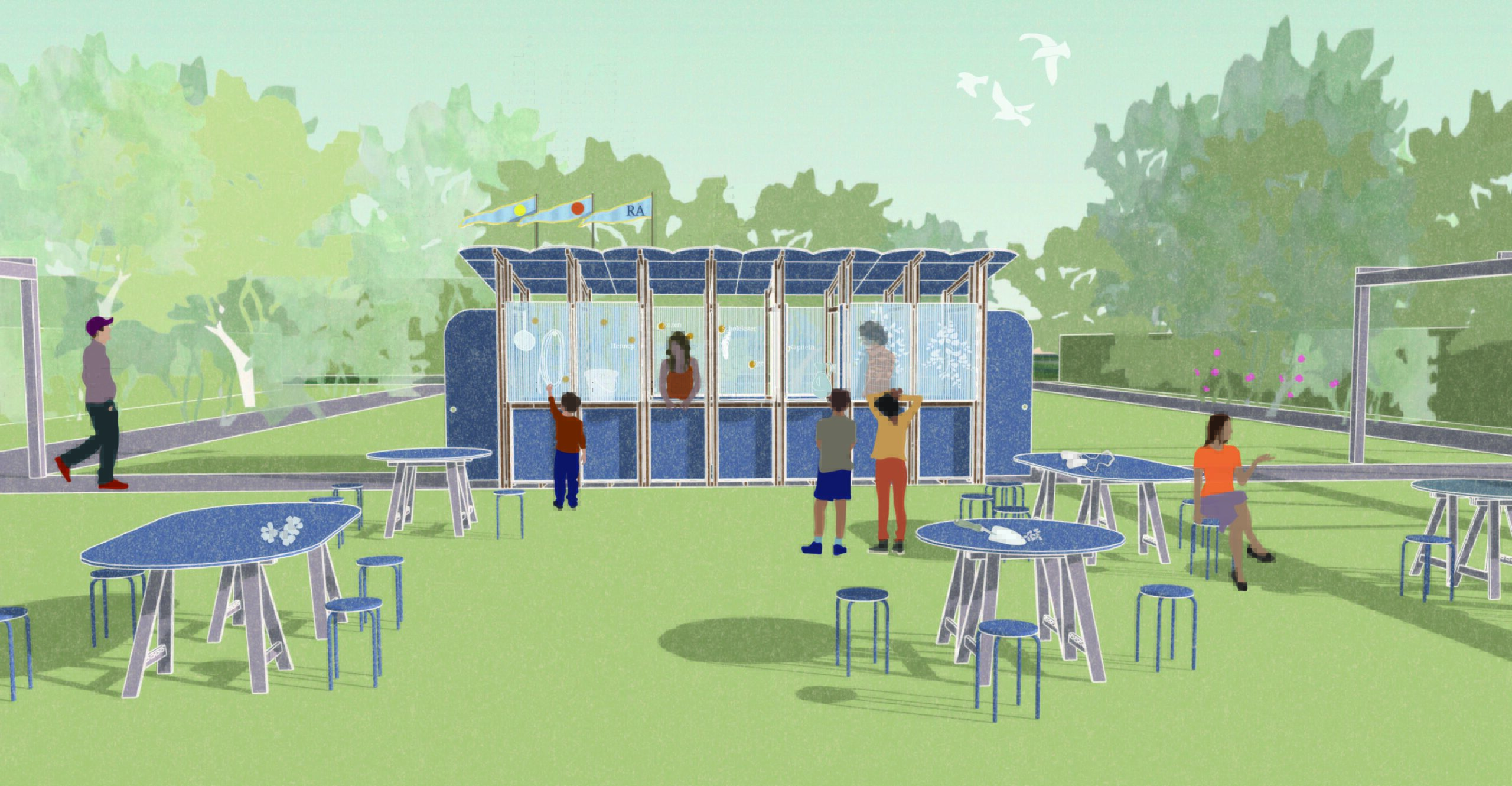
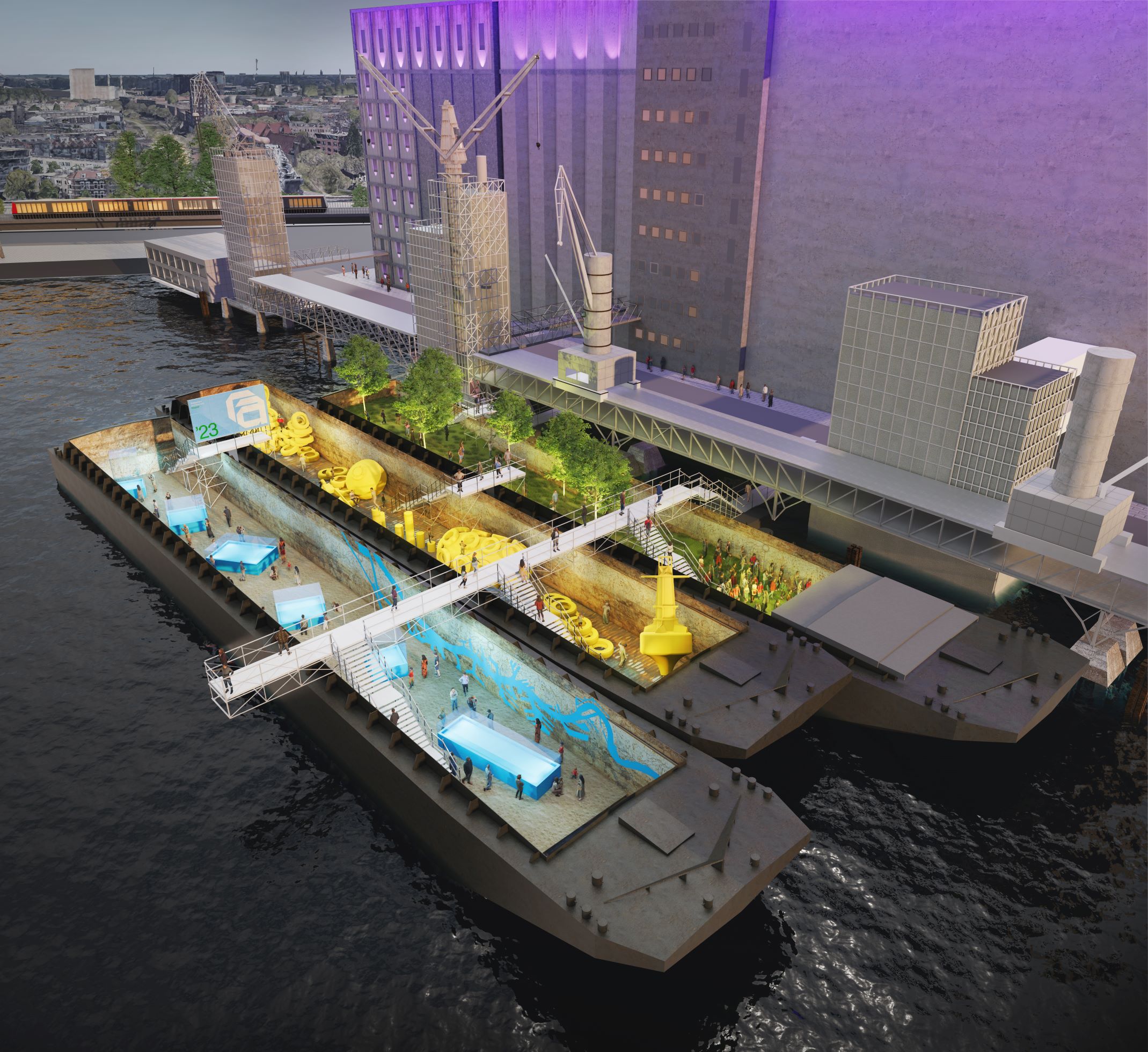
Monica:“M4H had already been on AIR’s radar for some time, and then they approached us with the concrete proposal of making this the festival hub for RA Month, using the motto ‘collectivity as the foundation of circularity.’ The Materials Yard focuses on circularity, while our exhibition explores collectivity. Across the city, communities, collectives, initiatives, and cooperatives are already playing a role in urban development. These are fascinating networks and organizations that can learn a great deal from one another. We want to showcase and connect them. We also broaden the perspective by including examples from elsewhere in the Netherlands. The goal is always to foster dialogue. The exhibition serves as the foundation for the programming—the starting point for conversation.”
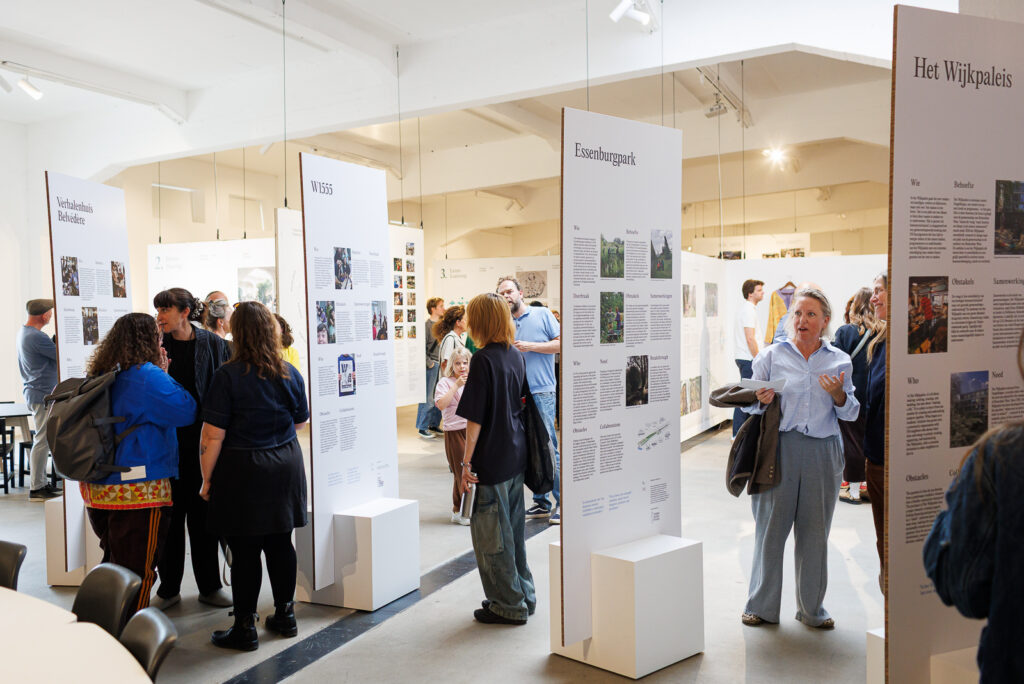
Tentoonstelling RA Maand | Foto: Fred Ernst
What does the future of this place look like?
Folkert:“In twenty-five years, this will be an incredibly interesting part of Rotterdam—something truly unprecedented. But it is impossible to form a concrete picture of it already. We are facing enormous challenges, and that means we need to be willing to experiment. There is still so much for us to discover and learn. Sometimes I feel everything is moving far too slowly, and I can become impatient. But when I look back and see what we have achieved over the past ten years, I realize that we have taken some remarkable steps forward.”